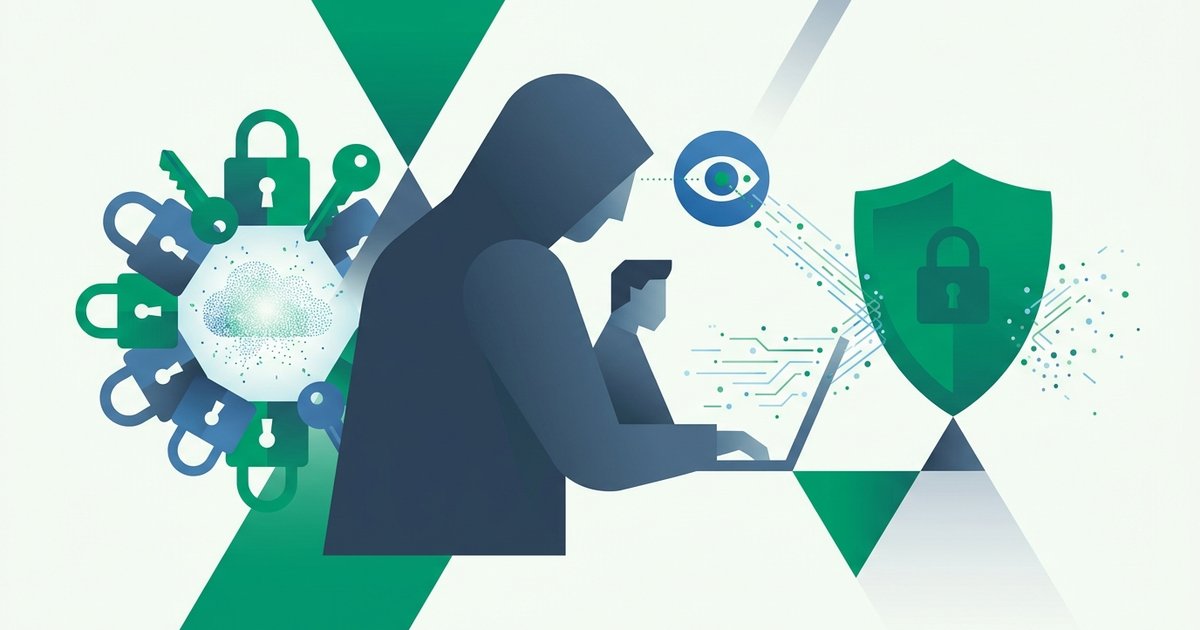
Every other attack in our threats series involves computation - Cracking rigs, botnets, malware. This one involves standing behind you. Shoulder surfing is exactly what it sounds like: watching someone enter a password, PIN or passcode, then using it. It predates computers, it survives every advance in cryptography, and in the smartphone era it has quietly become one of the most damaging attacks against ordinary people - Because the six digits unlocking your phone now unlock nearly everything else.
The uncomfortable math: a password's strength lives in how hard it is to guess. A shoulder surfer doesn't guess. Sixty bits of entropy protect you not at all against someone who watched your fingers.
The phone passcode heist
The modern template was documented in detail by the Wall Street Journal's reporting in 2023 on iPhone theft rings in US cities. The playbook: befriend or observe a target in a bar, watch them tap their passcode (or coax them into it - "hey, can you add me on Snapchat?"), then steal the phone. With passcode and device in hand, thieves changed the victim's Apple ID password from the phone, locked the victim out of their own account, disabled Find My, drained linked bank and payment apps, and resold the device - Often before the victim got home.
The passcode was the skeleton key. Phone platforms historically treated "knows the passcode and holds the device" as full proof of identity: enough to change the account password, view saved browser passwords and approve payments. Apple's response - Stolen Device Protection, added in early 2024, which requires biometrics plus a time delay for sensitive changes away from familiar locations - Is a direct admission of how much a watched passcode was worth. Turn it on if you have an iPhone; Android's theft-protection features deserve the same treatment.
This is social engineering at its most physical: no code, just staging, patience and a crowded room.
Where it actually happens
| Setting | What gets observed | Best countermeasure |
|---|---|---|
| Bars, transit, queues | Phone passcode | Biometrics in public; long alphanumeric passcode |
| ATMs and card terminals | Bank PIN | Cover the pad with your other hand - It defeats cameras too |
| Cafés, planes, trains | Laptop password, work screens | Privacy filter; sit with your back to the wall |
| Offices | Login credentials, badge PINs | Screen lock habits; challenge tailgaters politely |
| Security cameras | Anything typed in view | Assume lenses exist; shield entry |
Two things make the list deceptive. First, the attacker usually isn't a stranger with binoculars - Surveys on the topic consistently find people admit to glancing at colleagues' and even friends' logins, and opportunistic observation by acquaintances is the common case. Second, cameras count. A PIN typed under a convenience-store camera is a PIN on tape.
Entropy protects you from guessing, not from watching. Against a shoulder surfer, the strongest password in the world is exactly as secure as
1234- The defense is making sure there's nothing to see.
Defenses that actually work
Use biometrics in public. Face and fingerprint unlock are shoulder-surfing countermeasures first and convenience features second: every biometric unlock is one less passcode entry performed in view. The sensor can't be observed and replayed by a bystander. How the underlying matching works - And why the template never leaves your device - Is covered in our guide to biometric authentication. If you must type your passcode in a crowd, treat it like an ATM PIN: shield it.
Upgrade the passcode itself. A 4-digit PIN is four taps on a big, predictable grid - Trivially observable at a glance. Six digits are better; a longer alphanumeric passcode is dramatically harder to reconstruct from observation because the keyboard is denser and the length unknown. If you stick with digits, make them random rather than a birthday: our PIN generator will hand you one with no personal meaning to guess later. The trade-offs between the formats get a full treatment in password vs PIN vs passphrase.
Let autofill do the typing. A password that's never typed can't be watched. Storing logins in a vault like our Password Wallet and filling them automatically reduces public password entry to a single master unlock - Ideally biometric. As a bonus, the same setup defeats the digital shoulder surfer, the keylogger.
Physical hygiene for screens. Privacy filters (micro-louver films that black out the display beyond ~30 degrees off-axis) are cheap and transformative for anyone working in cafés or planes. Position matters too: back to the wall beats back to the room.
Cover the PIN pad. At ATMs and payment terminals, the free two-second habit of covering your typing hand defeats bystanders, cameras and the pinhole lenses used in skimming rigs simultaneously. Banks have printed this advice on ATMs for decades because it works.
When someone has seen your code
Assume compromise and rotate: change the phone passcode immediately, then check what that passcode could have unsealed - Saved browser passwords, payment apps, notes. If your device was also out of your control, review active sessions on your major accounts and sign out others. Speed matters most in the phone-theft scenario: the WSJ-documented crews changed account passwords within minutes, so enabling protections before the bar, not after, is the whole game.
FAQ
Is shoulder surfing really still common?
Yes, because smartphones moved high-value secret entry into public space. People unlock their phones dozens of times a day, frequently surrounded by strangers, and the passcode now gates payment apps, saved passwords and account recovery. Law-enforcement reporting on phone-theft rings shows organized crews built entire operations on observed passcodes.
Are 6-digit PINs safe enough for my phone?
A random 6-digit PIN is reasonable against guessing, since phones enforce delays and attempt limits - But any PIN is weak against observation because the digit grid is large and predictable to watch. If you're regularly in crowded places, an alphanumeric passcode plus biometrics for day-to-day unlocks is the stronger combination. Avoid dates and repeats regardless.
Do privacy screen filters actually work?
Yes - Micro-louver filters physically block light beyond roughly a 30-degree viewing angle, so a seatmate sees a black rectangle while you see your screen. The costs are some brightness loss and slightly odd colors at the edges. For anyone handling sensitive work in public, they're among the cheapest real security purchases available.
Isn't watching someone type a password too fast to follow?
Slower than you'd hope. Studies of observation attacks find single observations of PINs succeed alarmingly often, and attackers can watch multiple entries or record video to replay at quarter speed. Length and keyboard density are what break observability - Which is exactly why a 4-digit tap pattern is the weakest common case.
Does two-factor authentication protect me from shoulder surfing?
Partially. 2FA stops a surfer who learned only your password from logging in elsewhere, which is genuinely valuable. It does not help in the phone-theft scenario, where the attacker holds the very device that receives the codes - That's why the passcode, and protections like Stolen Device Protection, matter so much.